Friday, December 14, 2007
Mass Health
Here's a link to the Wall St. Journal health blog detailing the cost overruns with the Massachusetts model of "universal health care". It seems doctors and hospitals are being targeted for reimbursement cuts as a way to make the bottom line look a little more palatable. I loved the comment from "Anne" at the end asking why administrators aren't asked to take cuts in reimbursement when plans implemented by said administrators go awry....


Takedown

I've done four colostomy takedowns in the past 10 days. One of those weird streaks. All of them had had Hartmann's procedures done. Three had perforated diverticulitis and peritonitis and the fourth presented with an incarcerated inguinal hernia (gangrenous sigmoid colon.) The Hartmann's procedure involves doing a sigmoid colectomy and then bringing out the descending colon as an end colostomy. Patients who are sick or have a lot of fecal contamination of the peritoneal cavity are more safely treated with diversion because primary anastomoses in the pelvis are almost doomed to fail (leak) in such situations. The treatment plan is two-staged. Divert, recover from sepsis, and then bring them back in a few months for colostomy takedown. Patients are always disappointed to wake up and find they have the dreaded "bag" attached to their belly. It's understandable, of course, and you just try to reassure them that once they heal, re-establishing intestinal continuity is possible. They like to hear the word "temporary".

The problem is, not all colostomies are temporary. After Hartmann's procedures, only about 75-80% of patients are able to have the bowel reconnected. The long term effect of fecal contamination of the peritoneal cavity is severe scarring, disruption of normal tissue planes, and, often, transformation of pelvic anatomy into something unrecognizable. Colostomy takedowns are fraught with hazard. You spend over an hour sometimes just lysing adhesions and identifying what exactly the anatomy is. It's a major abdominal operation. Few cases make me as nervous. There's a disconnect between patient expectation and the reality. No matter how many times you tell the patient that the procedure is risky and could potentially make things worse, they want the "bag" to go away, no matter what. Luckily, none of the four leaked and are doing quite well......
Wednesday, December 12, 2007
Kevin Everett
Pretty cool profile on the Buffalo Bills tight end who was temporarily paralyzed duing a game earlier this season on SI.com. Apparently he's walking now and is slowly regaining much of his previous strength. The ortho-spine doc who initially managed his care at the game instituted hypothermic therapy to keep his core temperature at 91 degrees. This is still a bit controversial; the level I evidence in a trauma setting simply isn't there to recommend it as a standard of care but certainly things have worked out remarkably for this young man.
Inguinal Hernia

We see a lot of referrals for inguinal hernia in private practice. Other than lap chole, inguinal hernia repair is the most common operation done in America. What people don't realize is the anatomic complexity that must be understood and navigated when undertaking the repair. Surgical residents don't really "figure out" groin hernias until sometime in the third or fourth year. It requires thinking three dimensionally in a small space. Suddenly, something clicks and everything makes sense. You could watch three colon resections and have a good handle on how to do the case, but inguinal repairs need to be watched over and over. It's very subtle.
Given that surgeons have a hard time grasping groin hernias, it's no surprise that patients struggle to articulate what is happening to them. I hear various descriptions of something going on that isn't quite right. "I got a problem 'down there'". "My ball is swollen." "Something keeps jumping out when I cough." "It pinches when I work." "Something keeps going in and out." "My doctor says I got a hernial." I've heard it all. So let's do a question and answer session and clear some things up.
What is an inguinal hernia?
Hernia comes from the Latin for "rupture". It's basically a defect in the strong fascial component of the abdominal wall. The inguinal canal contains the spermatic cord and its associated blood vessels. The testicle starts out embryologically up near the kidney. As the fetus develops, it migrates from the abdominal cavity through the abdominal wall via the inguinal canal into its final resting place in the scrotum. The membranous connection to the peritoneal cavity is called the processus vaginalis. If this remains patent, one is susceptible to indirect inguinal hernias. Indirect inguinal hernias occur lateral to the inferior epigastric vessels. Conversely, direct inguinal hernias are not congenital. They occur through attenuated tissue medial to the inferior epigastric vessels. These are the hernias of "wear and tear" and heavy lifting. Differentiating direct from indirect is not always possible pre-operatively, but the approach is the same for each one.
Why should I worry about my groin hernia?
Several reasons. Number one, you worry about bowel slipping into the hernia and getting trapped (incarcerated). This can lead to bowel obstructions and even gangrene of the affected bowel. Fixing hernias in the setting of bowel obstruction or ischemic intestine can be quite problematic and morbidity/mortality rates are substantial. So it's wise to consider repair on an elective basis; before such complications arise. Number two, hernias don't improve with time. They get worse. If you're having a hard time now, it's not going to be any better in two years.
So should all hernias be fixed?
This is a little controversial. Asymptomatic inguinal hernias can probably be watched in most men. There's a good study from the Hines VA in Chicago that addresses this. Any symptomatic groin hernia should be repaired. Symptoms can vary from patient to patient. Anything from a dull ache at the end of a work day to a sharp, acute pinch with lifting can be described. Any hernia that you see bulging yourself should be repaired. All hernias in women should be repaired. Hernias in children ought to be repaired with high ligation of the sac.
How are you going to fix my hernia?
Inguinal hernia repairs have undergone quite an evolution over the past hundred years or so. Bassini perfected a technique that still bears his name in 1887. This involved suturing the conjoint tendon/internal oblique/transversalis musculature laterally to the inguinal ligament. McVay modified the technique by adding a relaxing incision in the rectus fascia and utilizing Coopers ligament for some of the sutures. The Shouldice repair is another tissue repair that closes/reinforces the inguinal canal in four running suture layers. The problem with all of these tissue repairs, however, can be summed up in one word: Tension. Tissues brought together under tension are doomed to breakdown. Recurrence rates with tissue repairs are as high as 50-60%. Tension also substantially increases post-operative pain. Patients were often hospitalized for 4 or 5 days after hernia repair in the days prior to the use of mesh.


So you use mesh?
Absolutely. Mesh allows for tension-free repair of the defect. Tension free repairs have reduced recurrence rates to around 1-5%. Post operative pain is now manageable on an outpatient basis; 95% of patients go home the day of surgery.
Isn't mesh dangerous? What about recalls?
Mesh infection rates are usually quoted as being less than 1%. I do these operations sterilely in the OR and peri-operative antibiotics are always given. The Kugel Composix Patch was the one recalled. I never used that particular brand.
What are the kinds of mesh repairs?
There's the Lichtenstein repair, the Plug and Patch technique, and the pre-peritoneal repair. All of them involve returning any indirect sacs to the preperitoneal space and reinforcing the inguinal floor with a non-absorbable, inert mesh. For open repairs I generally utilize the Modified Millikan technique (a Robbins/Rutkow modification) using a plug inserted through the internal ring into the preperitoneal space and fixed to the internal oblique, conjoined tendon and inguinal ligament with non-absorbable sutures. The floor is then reinforced with an onlay patch.

What about laparoscopic repairs?
There are two techniques to consider when discussing the laparoscopic approach: TEPP and TAPP. TEPP stands for total extraperitoneal patch. TAPP stands for transabdominal peritoneal patch. The best way of thinking about the laparoscopic approach is to imagine a hole in your windshield. Patching that hole from the outside is comparable to what happens during an open, anterior approach. The laparoscopic approach is like fixing that hole from the inside of the car. Same end result, just a different way of approaching it. We now have good evidence that laparoscopic inguinal hernia repair is comparable to the open approach in terms of recurrence rates. Moreover, there is also accumulating evidence that patients recover much quicker with the laparoscopic approach and are able to resume activities sooner. The problem is that you have to give the patient general anesthesia for these operations. It's also more expensive.
So who do you offer laparoscopic repair to?
Recurrent hernias and bilateral hernias are the best candidates for the laparoscopic approach. You don't want to have to dissect through previously disturbed tissue planes in recurrent hernias; the laparoscopic approach allows one to address the defect through fresh, undisturbed tissue. Bilateral hernias can be fixed simulataneously through the same laparoscopic incisions without much added operative time. I also consider laparoscopic hernia repair at patients request. Young athletes who want to get back to training as soon as possible seem to bounce back quicker with the laparoscopic technique. For run of the mill, unilateral inguinal hernia, I find it hard to justify laparoscopic repair. It's costlier and cardiovascular events are certainly increased anytime you subject a patient to general anesthesia. The open approach has a low recurrnce rate, allows the patient to go home the same day, and utilizes fewer resources. That's a tough combo to ignore.
How am I going to feel afterwards?
You're going to be sore. I usually write for prescription-strength pain medications for the first three to five days. Everyone recovers a bit differently. Some guys are ready for work in three days. Others need a bit more time. Some other things to expect: scrotal swelling, numbness over the incision, burning with urination, and prickling sensations that radiate into the upper leg. Almost universally, these issues are self limited and will resolve with time.
Any restrictions afterwards?
No lifting anything more than 25 pounds for at least three weeks. Other than that I encourage resumption of normal activities as soon as possible. At six weeks, the scar tissue that forms will be about as strong as it ever will be, so until that time avoid power lifting or any similar ultra-strenuous activities.
Friday, December 7, 2007
Friday Night Relaxing
I recently acquired Sirius satellite radio and I must say: how did I use to deal with drives to and from hospitals before? Imagine being able to control your listening environment completely as you navigate traffic lights, jams and off ramps. Here's my top 5 settings:
1. Channel 32, Grateful Dead radio
2. Channel 26 Left of Center
3. Channel 35 Chill
4. Channel 72 Jazz
5. Channel 17 Jam Bands
I also listen to Jim Rome as a guilty pleasure. In general, though, listening to regular radio is barely tolerable anymore. We've entered the era of optional commercials. You don't even have to watch your favorite TV show with commercials anymore; just watch it the next day on the internet, or wait for the entire season to come out on DVD.
Anyway, there's a terrific article in the New Yorker this week by Atul Gawande. Dr Gawande is a surgeon from Harvard who is also a rather prolific writer. His books "Complications" and "Better" were best sellers. He also writes regularly for the New Yorker as a medical correspondent. Now I have to admit, a few years ago I wasn't the biggest Atul Gawande fan. I suppose I was just jealous of the dude. He is a scientist, a compassionate physician commited to excellence, and a decent man who had endured some personal tragedies. But I focused on his occasional over-earnestness and tendency toward sententiousness in his writing. He was Dr Harvard and the quintessential "academic surgeon" and I was just sick of hearing about him. But I've come around. He's genuinely an intellectually curious guy. His prose is lucid and coherent. I like his stuff.
The article this week is entitled "The Checklist" and it's mainly about the efforts of a intensivist from Washington DC named Peter Pronovost to standardize protocols of care for ICU patients. There's plenty of science to show that unsterile technique leads to higher central line infection rates. That maintaining patients on prophylactic heparin/lovenox will reduce DVT rates. That early enteral nutritional support reduces morbidity in the critically ill. What Provonost found was that most American ICU's weren't consistently following these relatively simple guidelines. His radical idea was to standardize intensivist practice via the use of clinical checklists. Each central line placed had to be done according to protocol; mask, gown, gloves, sterile drapes, chlorhexidine scrub. Nurses made sure residents and attendings followed each step. Ultimately, infection rates were reduced 66%, saving millions of dollars and countless lives. Such a simple idea; but more effective than the billions of dollars pharmaceutical companies spend each year on the development of drugs that provide marginal and sometimes dubious benefit.
The point is that medicine has become too complicated for a single person to remember all the details that ensure its safe and efficacious delivery. The idea of a checklist eliminates the possibility (hopefully) of a crucial forgotten step. All well and good. But I always get wary of medical practice than relies too much on algorithmic thinking. You have to be careful not to try and implement formulas in all areas of medical care, especially surgery. It certainly works in trauma care and the safe placement of central lines. But you don't want to lose the element of flexibility. Sometimes a particular patient won't fit into the paradigm. You could standardize the laparoscopic cholecystectomy if you wanted; mandate that each resident trainee learns the steps in an organized, checklist-type fashion such that by the time he/she graduates, the procedure proceeds without even thinking, one step naturally leading to the next in a robotic, automatic fashion. But I don't operate that way. Each case is always just a little different. Anatomy, body habitus, little quirks always seem to arise that require a bit of improvisation. Sometimes I'll put the subxiphoid port in first, other cases require the subcostal ports to be first. Sometimes you have to take the gallbladder out of the liver bed first, in order to see. I do cholangiograms most cases, but not always. I leave drains in when I feel it's warranted. Sometimes I keep the patient on Zosyn post-operatively, sometimes one dose of antibiotic is all they get. Certainly the overall goal and concept is unchanged, but the route of accomplishing it varies. Algorithmic medicine relegates patients to the status of "object"; a thing upon which to execute a process. Never forget that that body sleeping under the sterile drapes is an individual; with subtleties and variations that just may not fit into your "scheme".
Thursday, December 6, 2007
Referrals
When I was a resident, all I had to do was show up at work everyday and patients would magically materialize on my list. Usually, it was annoying because longer lists meant more work. The OR schedule was usually full as we covered cases of multiple attendings. As a chief resident, it's fun; you round in the morning and then operate all day. It never really crossed my mind to think about where all these patients came from. They don't arise out of a vacuum. Someone had to be referring them to our surgeons.
General surgeons depend on primary care doctors and internists for business. We don't post ads in the newspaper or phone book. You won't see me on television touting my laparoscopic skills or announcing a year end close out on hernia repairs. The system is set up such that a patient must go through his/her PCP gatekeeper to get in contact with a surgeon. Ideally, this means that a referring doctor, using wisdom and experience, will refer a patient to the surgeon he/she trusts. And sometimes that's exactly what happens. An internist will develop a relationship and a level of trust with a specific surgeon and will refer most patients his way. But in this era of managed care and large multispecialty groups, the ideal isn't always realized. A lot of internists don't have a choice which surgeon to refer to. You simply give the patient the phone number of the surgeon in the group or the one part of the correct insurance plan, irrespective of said surgeon's capability or performance. I work in a small group that is completely independent of the two major medical behemoths in the Cleveland area so I get shut out of the patient base that is underneath those umbrellas. Every once in a while I'll take care of a patient from the Cleveland Clinic system who comes in late through the ER and I'll take out the appendix or whatever and follow up with the primary care doc over the phone, but no matter how well the patient does, or how quickly he recovers, I won't see any more patients in the future from that primary care doc because I'm simply not part of his "system". And that can be frustrating for a young general surgeon building a practice. Referral patterns, in an ideal world, would be based on surgical excellence, clinical outcomes, and personal relationships. Unfortunately, the reality is far from that. There is no absolute meritocracy in American medicine anymore. Most people's insurance plans restrict access to certain physicians. At some point, it may be necessary to join the giant group paradigm just like everyone else.
General surgeons depend on primary care doctors and internists for business. We don't post ads in the newspaper or phone book. You won't see me on television touting my laparoscopic skills or announcing a year end close out on hernia repairs. The system is set up such that a patient must go through his/her PCP gatekeeper to get in contact with a surgeon. Ideally, this means that a referring doctor, using wisdom and experience, will refer a patient to the surgeon he/she trusts. And sometimes that's exactly what happens. An internist will develop a relationship and a level of trust with a specific surgeon and will refer most patients his way. But in this era of managed care and large multispecialty groups, the ideal isn't always realized. A lot of internists don't have a choice which surgeon to refer to. You simply give the patient the phone number of the surgeon in the group or the one part of the correct insurance plan, irrespective of said surgeon's capability or performance. I work in a small group that is completely independent of the two major medical behemoths in the Cleveland area so I get shut out of the patient base that is underneath those umbrellas. Every once in a while I'll take care of a patient from the Cleveland Clinic system who comes in late through the ER and I'll take out the appendix or whatever and follow up with the primary care doc over the phone, but no matter how well the patient does, or how quickly he recovers, I won't see any more patients in the future from that primary care doc because I'm simply not part of his "system". And that can be frustrating for a young general surgeon building a practice. Referral patterns, in an ideal world, would be based on surgical excellence, clinical outcomes, and personal relationships. Unfortunately, the reality is far from that. There is no absolute meritocracy in American medicine anymore. Most people's insurance plans restrict access to certain physicians. At some point, it may be necessary to join the giant group paradigm just like everyone else.
Wednesday, December 5, 2007
Retrocecal Appendix

I got called late last night by a very insistent ER Attending regarding a young gentlemen with midline suprapubic pain for a week. He had a low grade fever and apparently was having severe pain with the rectal examination. The official report from the CT scan was negative for appendicitis or any significant intra-abdominal pathology. The ER Attending, however, was convinced that this was a case of "retrocecal appendicitis" because of the severe rectal pain. Now, I get this story a lot from the ER and the there's no scientific or anatomic foundation to it whatsoever. The term "retrocecal" implies that the appendix is located retroperitoneally, behind the cecum. The only way this can happen is if the tip of the appendix is pointing superiorly toward the liver. Certainly, the presentation may be a little different from an anteromedially located appendix (back and flank pain, pain with flexion of the psoas muscle) but there would be no reason for pain elicited on rectal exam, unless there was a perforation with resultant pelvic abscess. But this ER guy was adamant. I even got the "I've seen this lots of times before; its a retrocecal appendicitis" bit. When I saw him, he was certainly tender on digital rectal exam. I reviewed the CT on my own and I thought there was a suggestion of perirectal inflammation posteriorly in the pelvis. Then when I talk to the guy I find out he's being treated with high dose Cellcept and Prednisone for Lupus. Of course, no mention of this was made to me over the phone by the ER. So he's an immunosuppressed guy with severe rectal pain and questionable inflammatory changes on the CT scan. Evolving perirectal sepsis is number one on my differential. I'll probably examine him under anesthesia in the OR later today.
Tuesday, December 4, 2007
Friday night special
The last case of the day Friday was a classic. She was an 80 year old lady who'd been suffering from biliary colic for a number of years who finally decided to have her gallbladder taken out. Preoperative liver function tests were normal, but there was a suggestion of mild intrahepatic biliary dilatation on the CT scan. I repeated the LFT's in a week and, again, they were normal. So we prepared for laproscopic cholecystectomy. The gallbladder was jam pack full of hard stones and it was difficult to get a good grip on the fundus. There were a lot of dense adhesions, but I went slow, teasing away the tissue strand by strand. I identified a thin tubular structure coming out of what appeared to be the distal infundibulum of the gallbladder. I made a nick and inserted my cholangiocatheter. Under fluoroscopy, the dye seemed to flow easily into the duodenum but I couldn't get the proximal ducts to opacify. Based on the cholangiogram, one would have to conclude one was in the common duct. So I pulled out the cholangiocatheter and started to work a bit more on the dissection. There was a giant stone in the infundibulum, which made retraction suboptimal, but I was able to free things up a bit more and I thought I saw another ductal structure posteriorly. This is where the anal sphincter tightens up a bit. With retraction, the stone in the distal infundibulum started to break through the wall and it wasn't clear to me where the cystic duct was at this point. So I opened. I took the gallbladder down and it became apparent that there was a ping pong ball-sized stone lodged 1/2 in the common duct, 1/2 in the distal infundibulum. There was no cystic duct. I cut across the distal gall bladder and popped out the stone, leaving me with a fairly good sized defect in the lateral common duct. I closed the cholangiocather site with a single stitch of 3-0 PDS. Then I closed the common duct transversely around a 14f T-tube. A Jackson-Pratt drain was placed and I got out of Dodge. The intraoperative cholangiogram through the T-tube showed.... normal filling of all the intrahepatic radicles. Currently, she's doing great. LFT's are normal. No bile in the JP. I clamped off the T-tube. Plan for T-tube cholangiogram in 6 weeks.
The lesson in this case was: Trust Your Cholangiogram. Misinterpretation of a cholangiogram is one of the leading causes of severe biliary injury during lap chole. It isn't enough to simply "do the cholangiogram in the standard fashion." Think about what you see. It would have been easy to attribute nonfilling of the right and left ducts to a wide open sphincter of Oddi and just finishing the case. Especially on a Friday night. If the pictures you're receiving on the cholangiogram don't correspond to the mental image you have about what the anatomy is, then further investigation is necessary. You don't want to end up with this.

The lesson in this case was: Trust Your Cholangiogram. Misinterpretation of a cholangiogram is one of the leading causes of severe biliary injury during lap chole. It isn't enough to simply "do the cholangiogram in the standard fashion." Think about what you see. It would have been easy to attribute nonfilling of the right and left ducts to a wide open sphincter of Oddi and just finishing the case. Especially on a Friday night. If the pictures you're receiving on the cholangiogram don't correspond to the mental image you have about what the anatomy is, then further investigation is necessary. You don't want to end up with this.

Thursday, November 29, 2007
Efficient use of resources
Another classic example of the wasteful nature of the American way of providing medical care. An elderly lady came into the hospital last week with three days of severe RUQ pain. An ultrasound done in the ER suggested a dilated gallbladder with peri-cholecystic fluid and a positive sonographic Murphy's sign, but no gallstones. She was admitted to the medical service. A GI consult was obtained the next day. A CAT scan was ordered. Again, the imaging suggested edema around the gallbladder. She had a WBC count of 15k. Her hemoglobin was 12 (slightly anemic, technically.) So a surgical consult was obtained, right? Hardly. She was bowel prepped and underwent upper and lower endoscopy. Of course, the ubiquitous "antral gastritis" was diagnosed and she was immediately started on IV Protonix. Unfortunately, she continued to have RUQ pain (can you imagine, despite the protonix?). Cardiology was contacted but troponins and ekg's were negative. The next day a HIDA scan was obtained. This demontrated non-filling of the gallbladder up to 6 hours. At 5pm, my office received the consult for this poor lady. It hurts right here doctor, she said, pointing to under her right rib cage. The next morning she underwent a laparoscopic cholecystectomy, with severe inflammation of the gallbladder noted. She was in the hospital three days before a surgeon saw her. Multiple radiographic tests were obtained. Invasive procedures were performed. What is going on here? I'd love to see her hospital bill and tally up all the unnecessary work that was done. Multiply this case by the surprisingly numerous times similar patients are managed you'll find a gigantic sinkhole into which much of our health care dollars are lost.
The County
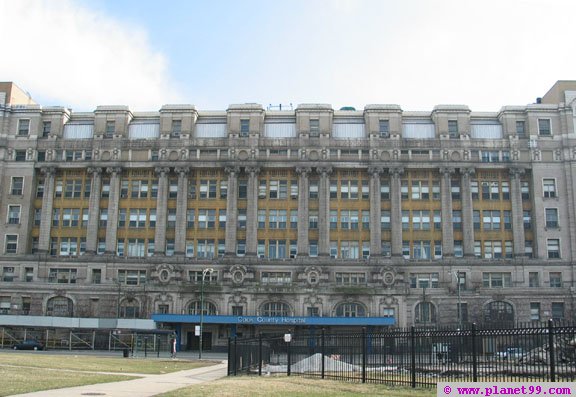
Sid Schwab's recent post about his time at San Francisco General Hospital got me reminiscing about my experiences at Cook County Hospital in Chicago. The place is closed down now; they built a brand new building just behind it five years ago. But I spent my first two years (the grunt years) as a surgical resident in that old claptrap. Rush has an integrated residency program where residents spend half their time at the Mother Ship (Rush) and half at the County. The disparity in care was striking. At Rush, you could count on air conditioning, clean supplies, efficient phlebotomy teams, rapid OR turnovers, VIP suites, and everything else you expect when you enter a modern American hospital. At the County, you could count on ... well, nothing. You'd see hundreds of employees milling around in the halls and common areas and it wasn't clear exactly what it was any of them did. We drew all our own blood. We wheeled patients down to radiology ourselves. We set up all the necessary discharge arrangements. We called patients at home the night before surgery ourselves to make sure they remembered to come in. You couldn't take anything for granted. Not even vitals. Ninety percent of patients on the wards would coincidentally have the exact same vital signs; 120/80 RR20 HR80, as if some mysterious magnetic force was compelling all the patients to breath and circulate blood simultaneously. You always checked pulses on your own. It was a culture of incompetence and laziness. No one seemed to care. It was the County system. That's the way things were. You could either fight the system and go home every night maximally frustrated or you could say hell with it and just be a bad doctor.
My first month as a surgical resident was at the County. It was July in Chicago and the temperatures were running in the high nineties. I remember the moment I first set foot inside the side entrance. A wave of heavy, stifling, steamy air swamped me and almost took my breath away. It was sweltering hot. My button down was saturated by the time I had walked twenty paces. It was if I had been magically transported to some jungle hospital in the middle of Cambodia. My instructions were to meet on the sixth floor at Ward 60. There were two options to get there. You could go up six flights of stairs. Mind you, these were real flights; 15 steps each direction back and forth. You'd pass overweight/out of shape residents paused on a flight, half way up, sucking air. It seemed there was always a code blue in the ICU (7th floor) when I was downstairs in radiology or somewhere and I'd have to race all the way back upstairs, jump on the bed and start pumping some lifeless body with chest compressions. Half the time you needed to be hooked up to the EKG monitor as well. The other option was to stand in the lobby with about 35 other people and wait for one of the two functional elevators to arrive. The wait could stretch as long as 30 minutes. The elevator would arrive and another few minutes would elapse as 15 or twenty people filed out. Then you had to get past the elevator operator. Yes, that's right, an elevator operator. These folks would make an East German border guard proud with the way they scrutinized ID's on people trying to get on board. No ID, no entry. It didn't matter who you were or what you looked like. A white lab coat, stethoscope hanging out your pocket, gauze and scissors and patient lists and xrays, nothing mattered except your picture on a laminated piece of plastic. The chairman of the department of surgery was once denied entry because he had left his ID in his office. He ended up taking the stairs. The elevator operators basically rode up and down all day in this tiny, suffocatingly hot little cubicle. Such a mode of employment attracted some interesting characters. There was the Jesus lady, who dressed like a nun, but wasn't one, who would sing everything to you rather than talk, like you were trapped in some horrid musical. May jesus bless you, she'd sing as you squeezed your way off at your floor. She actually had a nice voice. There was Carl, the black power advocate who was always reading some tome by Malcolm X or one of the Black Panthers. All the African-American men and women were addressed as Brother So-and-so or Sister so-and-so. Have a great day My Black Sister, he would say as they exited. Short white doctors like me weren't really acknowledged, maybe a grunt if you were lucky. There was a younger guy who frightened us all because he never spoke, just rhythmically banged his forehead into the metal wall and muttered unintelligible things as we rose through the shaft. Most of them brought chairs or fans or something to read. I can't imagine doing what they did all day long.
Once on the Ward, organized chaos ensued. The other intern, who had been there for a week already, tried to orient me, but there was too much keep straight. Rounds were a blur of gauze and tape flying back and forth and rapid talking and orders barked out by the chief resident and furiously trying to scribble down notes on what was expected, what needed to be done on each patient. Then the seniors went off to the OR and the interns were left alone to do all the work. One of the biggest jobs was making sure everyone had their blood drawn for labs. The phlebotomy service was arguably the most worthless department in the hospital, although strong cases could be made for radiology and nursing. Unless the patient was a 20 year old male with ropes for veins there was basically no chance in hell that your patient was getting his/her CBC drawn. So I became a pretty darn good phlebotomist. The first day, though, it took me four hours to get everything drawn on the 15-20 patients on our service. The worst part was nighttime. The lab where the blood samples were processed was actually across the street in a separate building. After hours, there wasn't a transporter to take the vials there. You had to deliver them yourself, if you wanted results that night. Let's just say the area around Cook County isn't exactly a place you'd want your wife wandering around at dark. The other option was to use the underground tunnels that connected the buildings (the Catacombs) but no one ever did that because there was some rumor that "people" lived down there and would rape and kill you if they stumbled across you. The main entrance to the lab building was locked at night so you had to use the service entrance around back. This deposited you in the basement where the morgue was. Nothing like standing in the basement of some creepy old building waiting for the elevator to arrive surrounded by a bunch of corpses. The worst sign out was when vascular wanted you to check PTT values on patients getting a heparin drip. Sometimes you'd make three trips during the shift as you tried to titrate the the drip to therapeutic range.
Speaking of vascular, that was easily the worst rotation. For some reason they never put more than one intern on the service even though it was by far the busiest service in the hospital. Vascular patients are a different breed. The atherosclerosis that affects their femoral arteries also inevitably affects their coronaries and carotids. They're the highest risk patients in terms of cardiovascular morbidity. If you want to do elective surgery (fem-pop bypass) a huge cardiac clearance evaluation is essential. This means everyone gets a stress test and a carotid doppler ultrasound and medical and cardiology consults. Generally, in a real hospital, this can be done on an outpatient setting. Not for County patients. There's no system in place for that. Your only option was to bring everyone into the hospital and do the workup as inpatients. The patient list would be three or four pages long. You had post ops, pre ops, patients in the midst of a workup, and emergencies/traumas. The intern had to keep track of it all. Four people would need stress tests, three would have to go for ultrasound, another six were awaiting final clearance from the cardiology service and on and on. Of course it was my job to make sure the patients actually got to their specific testing areas. Transportation only happened if an intern found a gurney, wiped it off, put new sheets on, and loaded the patient onto said gurney himself. The you had to push patient/gurney complex and any IV poles solo down the hall, into the elevator, through various corridors until you got to the stress test area. It was exhausting. Then you'd race back upstairs, load the next patient, draw more blood, change a dressing, fill out Byzantine discharge forms (called CAPS), pre-op the next day's surgery patients, write orders, follow up on tests already done. By evening rounds (Flip, we called it), everything was expected to be done. Another garagantuan list of chores would be piled on by the chief resident at Flip, and you'd spend another two or three hours taking care of business. Then you either went home (usually after 8pm) or starting taking call (and cross covering multiple other services). I lived in a tiny studio in Lincoln Park that first year without air conditoning. The only window opened up on a brick wall. I'd get home and collapse in a heap on the couch, eventually pass out with a half eaten pan of mac and cheese on the floor beside me. The alarm would go off at 4am and I'd start the whole thing over again. There were no days off. No one complimented you or held your hand. The expectation was that you'd be a professional and perform. The senior residents depended on you, but more importantly, the patients depended on your efforts. You learned how to be a doctor on that service. You took care of pneumonias and diabetes. You managed acute MI's. A sense of ownership developed; these were my patients. I was responsible for them. The recent changes in residency programs involving work hour reform makes it hard to inculcate such an ethic. Interns now go home at 7am post call no matter what. There's a disconnect between the theoretical benefits of reducing a resident's sleep deprivation and building the sort of doctor that society deserves. The lessons I learned at the County are with me even now. I practice medicine the way I learned it then. Anyway, this post is starting to get too long. Future posts on this subject almost certainly will be forthcoming.....
Subscribe to:
Posts (Atom)