Wednesday, December 31, 2008

2008.......


Here we go again. We come to the close of another year. Astronomically speaking, it's all relative. Tomorrow is really no different than any other. But it's nice to have points of demarcation. It's reassuring to know that at some point, you can say that the old concludes and that something new begins. Tomorrow represents that yearning for fresh beginnings.

But those are all cliches about the new year, sentiments pleasurably considered during the New Year's festivities. Those resolutions we all promise ourselves. Things are going to be different. Just you wait. Believe me, plenty of times I've written up New Year's manifestoes on a "better way to live" that were unceremoniously discarded by the Super Bowl. But for that brief period of time every early January, we are enchanted by the possibilities of starting over, rekindling lost loves, working harder, reaffirming lapsed disciplines, learning more, discarding old hindrances, eating less, exercising rather more frequently, reading those dusty medical journals, being a better doctor, a better husband, father, a better man, et cetera, etc. We can temporarily apply the brakes to the rushing onwardness of life, halting it miraculously with the chime of the midnight bell tonight. It all stops and then resets. Let me try again. Give me another chance. I'll do better this time. I promise. Two weeks later, old habits crop up. The alarm goes off at 5AM for your new exercise regimen and you roll over, hit the snooze. The most recent JAMA once again functions as a placemat for your morning Cheerios while you surf the web. We fail ourselves in so many small ways. But it's no biggie. There's always next year.

For some of us, however, the chance at redemption is elusive, even with the casual flip of the calendar. There are those unfortunate souls who have experienced real loss, the kind for which there are no magic elixirs. For those who have had to prematurely say good bye to a loved one, the coming of the new year is merely a bitter reminder of precious days lost and the ineluctable forward march of unforgiving time. Those moments in 2008 when you watched a woman hold her dying father's hand in the ICU. Or the gunshot victims crashing in the trauma resus bay and the wails of wives suddenly alone. The mother who collapses on the floor in the OR waiting area because you've just told her that her 30 year old son has metastatic colon cancer. This is a terrible business sometimes, this thing called human existence and as a physician I sit ringside at the carnage. But we all end up with front row seats at some point. It isn't an exclusive club. In the coming year there will inevitably be new travails and unexpected sorrows and you may very well find that it is you who sits forlornly next to a loved one in the last moments of life, watching the ravages of illness or old age irrevocably take from you everything that that person was. That day is coming for all of us. Maybe not this year but soon enough. I'm not sure what I'm trying to say. I just started typing. It's New Year's Eve. A new beginnning. Make the most of it. Don't neglect the nuances. Savor the absurdity of simple times. Memories, no matter how piquantly vivid, are like ethereal sidelong glances compared with even fifteen minutes of actual, living, tangible time. A cup of coffee on a Saturday morning. An unannounced visit. A phone call randomly in the middle of the week. An unexpected apology. A dropped grudge. Those moments are there for the taking every single day, whenever you want; not just on January 1st....

Happy New Year

SPC

Sunday, December 28, 2008

Afferent Loop Syndrome


I performed a Whipple not too long ago for a pancreatic head mass. On the fifth post-op day, she started spiking fevers. The ensuing fever work-up included a CT scan of the abdomen (images shown above). What we see is a dilated loop of small bowel trekking transversely across the abdomen. The rest of the bowels appear normal. Closer inspection also reveals some oral contrast refluxing back into the intrahepatic biliary branches.

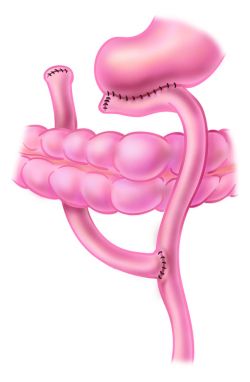
What we're dealing with is a classic case of Afferent Loop Syndrome. When you do a Whipple or a Billroth II gastrectomy, there is a loop of bowel (jejunum and/or duodenum) that extends upstream from the gastrojejunostomy toward the pancreas and common bile duct. The efferent limb extends downstream through the distal jejunum and on down towards the cecum. Afferent loop syndrome is a mechanical bowel obstruction (internal hernia, volvulus, stricturing, etc) that results in an effective biliary outlet obstruction.

In a post-op Whipple patient, an acute afferent limb obstruction is especially concerning because there's a fresh bilary anastomosis potentially at risk. If the intestinal limb of the choledochojejunostomy is all dilated and inflamed, you worry about suture line breakdown and development of a bile leak. Moreover, if the bile can't flow downstream, it's going to tend to reflux back into the liver, along with the bacterial flora of the small intestine. This can lead to a severe form of ascending cholangitis, with liver abscess formation.

Now you can't screw around if you suspect afferent loop syndrome. The treatment is surgical. It's a mechanical problem. Sitting around and assuming there's just an ileus or a motility problem will only delay the inevitable. The longer you wait, the worse your patient will do.

When I took her back, the obstructed, summer sausage-swollen afferent limb was confirmed. The choledochojejunostomy looked ok, but seemed to be ready to burst at the seams. The etiology wasn't entirely clear to me. It wasn't a volvulus. There wasn't an internal hernia. It just didn't seem to want to "lay right" without kinking (perhaps secondary to some redundancy in the afferent limb). So I rerouted the afferent limb downstream via a Roux-en-Y reconstruction. Subsequently, the cholangitis cleared up and she ultimately went home a week or so later...

Saturday, December 27, 2008

Mandated Health Insurance

President-elect Obama has his work cut out for him. A recent poll from Consumer Watchdog suggests that the majority of Americans are opposed to any federal proposals that would mandate that each citizen demonstrate proof of health insurance. Lack of mandated coverage would then result in tax penalties or other fines.

Frankly, this finding is outrageous, but all too illustrative of a "gimme something for nothing" tendency we see in this country. Currently, about 16% of our entire GDP is spent on health care. That's a lot of dough. Opting out of health insurance places an enormous burden on those who play by the rules. It's a violation of the social contract. It's certainly unethical and one could make an argument that there is something almost criminal about such a choice. Isn't it a form of stealing? People didn't blink an eye when laws were passed ten years ago mandating car insurance. It's easy and not all that expensive. Shop online. Choose a cheap collision-only plan, if that's all you can afford. But when it comes to insuring our health; how dare you force me to buy coverage? I'm not sick! I haven't been to a doctor in years!

Obviously, I'm glossing over pertinent issues such as the cost of purchasing individual health insurance independently of your employer. And the problem of insuring unhealthy people. And the lack of choice individuals have if they decide to strike out on their own (as opposed to the car insurance example where you can browse Progressive, GEICO, State Farm etc online until you find the best deal). But the results from the (admittedly a limited sample) poll are disturbing.

If we can't be more self sufficient and act in a manner that is most conducive to the benefit of the greater whole, we just give more ammunition to proponents of single payor, federally directed, monolithic "National Healthcare" plans. You see, they argue, Americans can't be trusted to do the right thing. Unless we place all the power in the hands of a giant federal bureaucracy we will continue to have 50 million uninsured and exponentially rising health care costs! With nationalized coverage, there will be no need for "mandates"! Everything will be paid for. By wealthier Americans! No worries!

Turning our health care system in a giant version of the VA or a County Hospital with physician remuneration via a hypertrophied Medicare/Medicaid is surely not the corrective antidote. Individual choice still matters. Foisting the responsibility onto our populace is not necessarily a bad thing. There have to be consequences for those who choose not to fulfill that repsonsibility. Once health insurance is mandated, we can manipulate things to make some form of coverage available to all Americans. But it first has to be ingrained in the societal conscience that going through life (irrespective of how 'healthy' you are) without health insurance is unacceptable....

Tuesday, December 23, 2008

Debt Free

Medical student debt is the first thing we need to rectify as we try to address the primary care issue. One quarter of students are graduating with loan obligations totalling over $200,000. Consider that most med school grads are in their late twenties/early thirties and often have families to support. The pressure is on to make some money fast. Why pursue a career in a field that pays pennies?

The article notes that $2.5 billion in federal loans are available to medical students every year. What if, as part of the Obama health care revolution, we invested that $2.5 bill in our future doctors? Or even half that. What's a billion buckaroos when we've already doled out hundreds of times more than that to cover up corporate malfeasance?

What if medical school was free in the country, given that you signed a contract stipulating an agreement to pursue primary care (family practice or internal medicine) as your specialty? Wouldn't that be enticing? If you changed your mind and just had to be an interventional cardiologist, then you would have to pay back the costs of your schooling. Like if you decide to drop out of ROTC before fulfilling your obligations, you owe the government the costs already accrued.

Medical school debt is no doubt the driving force behind the primary care shortage. Merely increasing the remuneration by a certain percentage points on office visit billing codes is like putting duct tape over a smashed windshield. Plus it looks unsightly. It isn't enough. It's not going to significantly alter the distribution of grads who opt out of primary care.

It's time this country bailed out something besides Armani-attired executives who fly into Washington DC on chartered jets. Whether or not Chrysler totters along for another twenty years isn't going to affect American prominence in the world nearly to the extent that a crumbling health care system will. It's time we invested in something a little more worthy of a liberal democracy....

Sunday, December 21, 2008

Dark Star


Hey, it's the Winter Solstice, longest night of the year. If you have Sirius/XM, channel 32 (Grateful Dead radio) had a Dark Star marathon. Yes, they played different concert versions of Dark Star all day long. It's one of the Dead's best compositions; a long, languid, jazzy/trippy, improvisational, mind blowing exploration of beautiful sound and discovery. If you're into that kind of thing.

Check out a sample:

Dark Star

Saturday, December 20, 2008

What are we doing?

Take a minute and read through this article from the NY Times. It's a great review of the nefarious doings at Merrill Lynch right before their house of cards caved in. In 2006 the division of Merrill concerned with bundled mortgage securities distributed close to $2 billion in bonus payouts to about 2,000 employees. The head of the unit, Dow Kim, received $35 million for his efforts. Of course, the "profits" claimed by Merrill during the housing/real estate boom were based on smoke and mirrors. The mortgage derivatives market collapsed (unsurprising, in retrospect) and the consequences shook the foundations of Wall St. Lehman Brothers went bankrupt. Merrill was acquired by Bank of America, ending 94 years of existence as an independent firm. And our government sanctioned a $700 billion bail out of the corporate barons of high finance. $700 billion buckaroos. $700 billion. Another $80 billion was fronted to AIG. And just this week, W approved a plan to grant the auto industry $13 billion now, with more to come in the spring.

To put that in perspective, we've spent somewhere around $600 billion thus far to finance the war and occupation of Iraq since the 2003 invasion. And that's over five years. Our government just forked out 30% more than that in a matter of weeks. We throw these numbers around like it's nothing. The word "billion" apparently has lost all connection to reality because, hey, the federal government can just dole out checks with nine zeroes after the integers whenever they feel like it. But it's a lot of money. The entire budget for the Departments of Education and Labor combined for fiscal year 2009 is "only" about $120 billion.

So what does this have to do with medicine? Not a whole lot. I admit that I'm probably stretching it a bit here. But we do have a crisis of epic proportions in health care. Too many people either don't have enough coverage or aren't covered at all. Morever the cost of health care is rising at astronomical levels. In 2007, we spent $2.3 trillion dollars on health care expenditures. That's 16% of our entire GDP. Finally, we face an impending shortage of the very professionals needed to provide the sort of cost-efficient, excellent care that any all-inclusive health care reform would hope to implement. Younger doctors are opting to pursue careers in higher paying, less stressful specialties rather than slogging through the rigors of a standard primary care practice setting. And who can blame them? Graduating from an accredited medical school in the country oftens saddles you close to $200,000 in student loans. Now we have a President who has made it very clear that he has every intention of rectifying most if not all of our deficiencies. And he's going to need doctors who buy into it and want to make it work. So that puts us in the driver's position, right?

Well then I read the vitriolic op-ed piece in Emergency Medicine News by the eminent Dr. Jonathan Glauser (from the Cleveland Clinic Foundation of Higher Medical Instruction and Sophistication) where he basically embarasses himself in front of the country in writing. The article is hilarious.

Countering the idea of improving payments to primary care physicians he writes:

Say what? Fund physicians to promote primary care? Why throw good money after bad? If ever there was a group that has failed in providing care, it is our primary care system. To fund such a venture for groups that are singularly inept at performing anything of value to society is pure folly and a waste of precious health care dollars.


Now that's just schoolyard bully talk. It's harmful only in the sense that it damages the professional reputation of a singular ER physician on the banks of Lake Erie (I'm sure Toby Cosgrove's henchmen have "taken care" of this little problem). It's a rant by a nut-job. Why should any of us be bothered by it? This is like being worried about the state of the NFL just because OJ Simpson is in the Hall of Fame. Dr Glauser wrote an extremely shallow, poorly thought-out, amateurish, overly emotional piece that surely, given his education and prominent position, he now regrets. And that ought to be the end of it.

But my concern is with a commonly held position that this sort of attack on primary care is just the beginning. The Medical Webmaster himself, Kevin MD, hints at this in a post from last week:
The nature of budget-neutral reform means that physicians like Dr. Glauser will take a substantial pay cut to adequately fund primary care.

He's merely laying out the groundwork for a furious specialist assault on primary care that will be sure to come.


In other words, all specialists deep down harbor a fear of any sort of remuneration reform and it's going to lead to irreparable animosity between the overpaid specialists and the true soldiers of American health care, the noble internists and family practice docs.

Unless I'm misinterpreting things, this is an entirely disingenuous stance. As Max Baucus avers, any payment reform will need to be conducted in a "budget neutral" manner. That means the current pool of health care dollars that is directed toward physicans will not be increased, it will just get divvied up differently.

And why are we comfortable with this? Why, as professional group are we content to passively take whatever federal regulators want to give us? Why is it a done deal? This "spat" between the Kevin MD faction and the Jonathan Glausers of the world is just what the government and insurance companies and everyone else wants. Infighting and disunity. Physicians battling each other over ever diminishing scraps. It's the wrong outlook.

I have my own issues with the theory that simply increasing your family practice doc's pay is the fundamental solution to our nation's health care ills. If a doc has to see 30 patients a day to make 130,000 grand a year and you increase his pay so that he is compensated, let's say $150,000 a year, you really haven't solved any problems other than the one specific problem of low primary care pay. That family doc still has to see 30 patients a day. He still will need to keep his office booked for months in advance. He still won't have much time to take care of emergent issues, shunting acute problems off on the ER. The internist will still need to see the same number of inpatients to reap the rewards of higher pay, thus perpetuating the shotgun consult method of practicing medicine. Nothing really is going to change with a modest alteration in the salary structure. We need to aim higher. After all, there's plenty of money out there, apparently. Just ask the failed barons of Wall Street.

Rather than dutifully accepting "budget neutral" reform, consider the following:

1. Make it financially doable for doctors to spend time with patients. Instead of thirty a day, what if you could see five in the morning and five in the afternoon? And you had scheduled gaps to account for acute care issues that arose unpredictably? Think of how thorough you could be. Think how many fewer consultations would be necessary.

2. Student loan forgiveness for those who pursue primary care/internal medicine.

3. We'll need more doctors

4. Market forces alone will make it unsustainable for graduating medical students to opt for speciality careers, assuming that better paid doctors who can spend more time on individual patients will not need to rely on specialist consultations as before.

5. It's going to cost a lot of money

Listen, change is coming. It's inevitable. Obama has his mandate. But he's going to need us, and I stress us, all physicians, to make it work. Without the cooperation and enthusiasm of all doctors, the Obama revolution is doomed to a similar outcome as that seen in the 1990's with HillaryCare.

Friday, December 19, 2008

Face/Off

So Dr. Siemionow at the Cleveland Clinic Foundation performed the first face transplant in the United States this week. I say good for her. Good for the patient. Let's just hope that it works.

Transplant surgery is an incredibly complicated amalgam of immunologic manipulation and technical expertise. Successful outcomes depend on two things: flawless surgical technique and tricking the body's defenses into thinking that a foreign protein (the donor organ) is not a threat. The surgical aspect requires meticulous dissection and the creation of tenuous anastomoses (bowel, vessels, nerves, etc) in patients who are high risk and exceedingly fragile. The immunomodulatory issues, however, are a lifetime challenge. Rejection is a constant threat requiring vigilant montioring. T-cell mediated rejection afflicts 30-50% of new liver transplants within the first 6 months. Most of these can be managed with high dose steroid pulses but a small percentage progress to chronic rejection despite all best efforts.

If your kidney graft starts to fail, a patient can go back on dialysis until another one becomes available. When a liver graft fails a patient will often end up back on the top of the recipient list because of a high MELD score. But what happens when your face graft fails? You can't just slap on another one from the donor list. You basically get one shot at it. The graft is removed and the defect is covered with skin auto-transplanted from your thigh or buttocks. Once again, the patient is ostracized from the rest of humankind by his/her deformity.

Self identity is what we feel we project onto others. The way we smile, an arched eyebrow, the way we tilt our heads when asked a question, these subtle gestures and tics are the tools we use to hint at what's going on in the depths of our heretofore unfathomable consciousnesses. Without the face, we are, in many ways, sundered from our fellow man. The ability to project ourselves, to communicate the inarticulable, is crippled without it. Too often, the Other is too lazy to look beyond the superficial reality of what presents itself; a face, a body, a skin color. The despair of not being able to express yourself because of a "defect" in physicality must be indescribable. And so this concept of "face transplantation" is a noble endeavour. But I worry about the long term results. Can you imagine living in social isolation for years after an injury/accident, then being given a new face, a new identity via a graft which allows you to re-enter society and present yourself as a complete physical human being, just like everyone else, only to have that torn away from you after a couple years because of rejection issues? I can't imagine...

The ultimate solution likely is going to come from advances in stem cell research. Instead of using cadaveric or live donor grafts and subsequently engaging in a life long battle to outwit our immune system, we could grow tissues from our our own cells, avoiding the problem of rejection altogether.

Thursday, December 18, 2008

Staying Overnight for the First Time

I have a guy in house now who underwent a repair of a giant paraesophageal hernia last week. He's in his 70's, retired and tough as a box of nails. He served in Korea and then came home and was a foreman on a factory line for 30 years. For the past several years he'd been suffering from this giant hiatal hernia where half his stomach was lodged in his chest, crushing his left lung. For years his GI guy and his wife had been insisting that he consider surgery. Hell no, he'd always replied. Finally he relented. He couldn't sleep at night, couldn't catch his breath while recumbent.

The surgery was tough. Usually I can get the stomach and the hernia sac down into the abdomen laparoscopically but his was chronically incarcerated. It didn't want to slide down the way they sometimes can. I didn't want to tear the stomach so I had to convert to an open procedure. The post operative course was complicated by a pulmonary embolus (despite compression boots and prophylactic Lovenox, never event indeed!) and so his hospitalization has been longer than any of us anticipated. Initially, after the PE was diagnosed, he was on a non-rebreather mask and you couldn't really converse with him all that well. Is was like someone trying to talk to you underwater.

One day, he grabbed my hand while I was making rounds. He has these thick, hulking, calloused hands, the knuckles gnarled and jutting off in odd directions and I'm always nervous if I'll ever see my palm again whenever he wants to shake it. I have to tell you something, he said, his voice muffled and distant behind the mask. I helped him lift it away from his mouth. I watched his oxygen saturations closely.
-I'm going to be Ok, right? he said.
-Yeah. You're a tough old bastard. You're going to be fine.
He nodded. He took a deep breath. He was gasping a bit.
-You know in 51 years of marriage we've never spent this many nights...
He stopped. His eyes were swollen and red rimmed. He was fighting to catch his breath, but also, he just didn't want to go on, having said too much already to this young doctor.
-It's ok buddy, I said. I know what you're saying. I slugged him in the shoulder, or some such awkward attempt at male affection and helped him with the oxygen mask.
-You'll see her soon, I said. You be sleeping next to her again before you know it. I promise you....

Monday, December 15, 2008

Small Bowel Carcinoid


Unusual and interesting case of a primary small bowel carcinoid tumor recently. This was an older guy who had been diagnosed with a low grade lymphoma 5 or 6 years prior to our encounter. He presented to the ER with a high grade small bowel obstruction and renal failure secondary to dehydration. He'd never had an abdominal operation before and there were no obvious incarcerated abodominal wall hernias on exam. In that scenario, any halfway decent clinician ought to be worried about an underlying neoplastic cause of the obstruction, especially given a history of lymphoma as in this particular patient.

The CT scan above demonstrates a patially calcified mass in the mesentery of the small bowel, very close to the terminal end of the superior mesenteric artery. I explored him and excised a segment of ileum that had 7 separate carcinoid tumors. Then I basically shaved this mass off the distal SMA/ileocolic artery. Most of the lymph nodes in the mesentery had been totally replaced by metastatic carcinoid tumor but the intestinal margins were clean.

Carcinoid tumors are an odd ball in surgical oncology. Overall they are rather rare, but they are the most common tumors seen in the appendix and the second most common cancer seen in small intestinal malignancies. They derive from neuroendocrine tissue and can secrete hormonally active substances (serotonin/kallikrein) that can cause what is known as the "carcinoid syndrome", an uncommon presentation that includes such symptoms as flushing, diarrhea, bronchoconstriction, cardiac valvular lesions, and telangiectasia.

Carcinoid tumors also tend to be multicentric, so make sure you run the entire length of the intestinal tract when you've got that abdomen open; 30% of the time you'll find another one. They also have a tendency to incite a severe desmoplastic reaction in the surrounding tissues. Mesenteric deposits near major blood vessels (SMA) can sometimes encase themselves in a hard, fibrotic shell, making safe resection hazardous, if not impossible.

The good news is that carcinoids are generally slow growing, indolent tumors. Long term survival for early stage tumors is on the order of 70-90%. Even patients with distant metastases can live for several years or more. Manifestations of the carcinoid syndrome can often be effectively palliated with somatostatin analogues such as octreotide.....

Saturday, December 13, 2008

Ghostwriting and the New Gilded Age

What exactly is going in America right now? Are we better off just assuming that truth and transparency are elusive? The Blagojevich scandal that now dominates the headlines is merely the apotheosis of a trend toward corruption and dishonesty in all facets of American life. In sports, the feats and record setting performances of an entire era are tainted by the specter of steroids. In journalism, the fabrication scandals of Phillip Glass and Jayson Blair aroused doubt as to the veracity of the stories we read everyday in our newspapers. In finance, the thieves of Wall St. are walking away from the greatest financial disaster in 80 years, their own pockets lined with gold. Our Commander in Chief cavalierly led us into a calamitious, profligate war under false pretences.

And now we hear of unscrupulousness in the the field of science. One would think that, even in this jaded time of relentless exploitation and frivolity, something like the scientific method would be sacrosanct. Not so much. The NY Times reports that the pharmaceutical company Wyeth paid ghostwriters to produce articles for the medical literature supporting the safe use of Prempro (a hormone replacement drug given to women for alleviation of the symptoms of menopause). Subsequent data (real science) has shown that treating menopause with estrogen is extrememly dangerous; a woman's risk of developing breast cancer is increased by 5%-6% for every year of use. In fact, the decline in the incidence of breast cancer has been attributed to the fact that the use of hormone replacement therapy (HRT) has decreased over the past five years. Just this past week, the San Antonio Breast Cancer Symposium presented indubitable evidence from the Women's Health Initiative that HRT doubles a woman's risk of acquiring breast cancer.

It seems that Wyeth subcontracted the business of science paper creation out to a private firm called DesignWrite. The completed papers were then given to chosen physicians for review and the final product was then forwarded to medical journals with the name of said prominent doctor listed on the abstract as author. Now this isn't a small thing. This isn't something that ought to get swept under the rug as soon as the next news cycle washes in to shore. The ethical compromises that are apparent in this are staggering. We have to live in a world where 2+2=4, no matter who is performing the computation. We have to be able to trust our science. There has to be a complete separation between the hard cold reality of pure empiric science and the vested interests of a corporation whose profits depend on whether an experiment turns out one way or the other. Our medical journals need to draw a line in the sand; no more papers "sponsored" in any shape or form by the pharmaceutical or medical device industries will be published. One small step at a time, we have to re-assert the primacy of truth and objectivity in our lives. One would think that science would be the easiest place to start.